


















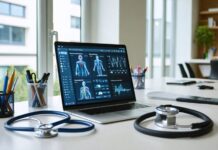











Health informatics degrees now combine immersive patient‑care experiences with rigorous data‑science and technology training. Core curricula cover EHR systems, decision support, interoperability standards, and regulatory compliance, while labs teach SQL, predictive modeling, and multi‑modal AI integration. Specialized tracks focus on nursing, pharmacy, public health, or ambulatory care, and delivery formats range from virtual‑only to hybrid, offering hands‑on clinical rotations. Graduates emerge ready for roles such as clinical informatics specialist, health data analyst, or chief medical information officer, and further details reveal how each program aligns with industry standards and career pathways.
How Health Informatics Degrees Blend Patient Care, Data, and Technology
How do health informics programs simultaneously nurture clinical perception, analytical rigor, and technological fluency? They integrate patient‑care immersion with data‑science rigor, ensuring graduates can translate bedside perception into actionable intelligence.
Core courses on electronic health records, decision support, and patient portals teach regulatory compliance while emphasizing interoperability standards that enable seamless data exchange across institutions.
Parallel tracks in research methods, AI, and health‑information vocabularies equip students to manage large datasets, develop predictive models, and visualize outcomes.
Infrastructure modules cover cloud‑based EHR frameworks, biosensor integration, and security protocols, reinforcing a systems‑thinking mindset.
Capstone projects synthesize these elements, applying informatics solutions to real‑world clinical settings, thereby cultivating a cohesive professional identity rooted in safety, quality, and collaborative innovation. 12‑month program length allows students to complete the degree efficiently while gaining practical experience. The program requires a field experience to bridge theory and practice. The rise of wearable biosensors expands real‑time physiologic monitoring, enhancing data sources for informatics curricula.
Core Curriculum Elements You’ll Find in Every Top Program
Launching a health informics curriculum begins with a structured foundation that interweaves introductory informatics, clinical information systems, data science, standards, and health‑systems behavior.
Core courses such as INFO‑I 501 and MHI 403 establish a baseline in health IT, whereas HINF 5011 and INFO‑B 535 deepen understanding of electronic health records, decision support, and workflow integration.
Data‑centric modules like INFO‑B 518 teach applied statistics, predictive analytics, and big‑data management, aligning with AMIA competency frameworks.
Standards instruction, exemplified by INFO‑B 581, guarantees mastery of Interoperability standards and controlled vocabularies, while INFO‑B 505 cultivates project leadership and Ethical governance.
Finally, health‑systems behavior classes investigate human factors, change management, and interprofessional collaboration, preparing graduates to steer socio‑technical environments and contribute responsibly to patient‑centered innovation.
Elective approval is required for any non‑standard courses, ensuring they align with the program’s specialization tracks. Specializations provide career‑focused tailoring of studies.
How AI and Emerging Tech Are Integrated Into Modern Courses
Integrating AI and emerging technologies into modern health informatics curricula begins with a structured, data‑driven framework that introduces core AI concepts in the first week and aligns them with the R.O.A.D. Management Framework.
Curriculum design then layers fundamentals of machine‑learning methods, predictive modeling, and multi‑modal data integration, allowing students to evaluate SVM, Random Forest, and explainable models against real‑world health outcomes.
Hands‑on labs embed NLP for clinical note summarization and EHR integration, reinforcing human‑AI collaboration.
Simultaneously, AI ethics modules address bias, fairness, transparency, and equitable deployment, ensuring that future informaticians can navigate policy constraints while building trustworthy systems.
Capstone projects synthesize these elements, preparing graduates to pitch, implement, and monitor AI‑driven solutions within complex healthcare environments.
The specialization includes a dedicated AI safety module that teaches validation of accuracy, completeness, and clarity in clinical decision support. Harvard Medical School faculty guide participants through real‑world case studies and implementation strategies. The program offers a professional certificate recognized by U.S. News & World Report.
Data‑Analytics Skills That Prepare You for Real‑World Healthcare Challenges
Mastering data‑analytics skills equips health informatics professionals to guarantee raw clinical records into actionable understandings.
Proficiency in SQL, especially window functions, CTEs, and complex joins, guarantees extraction of precise cohorts from Epic Clarity, Cerner, and other EHR warehouses, supporting patient engagement initiatives that rely on accurate inclusion/exclusion logic.
Intermediate statistical analysis—hypothesis testing, regression, survival modeling—provides the quantitative backbone for quality measures such as HEDIS and CMS, directly influencing reimbursement and care outcomes.
Advanced Tableau or Power BI dashboards translate these findings into visual narratives for clinicians, executives, and regulators while maintaining data security through role‑based access and encryption.
Acquiring HL7/FHIR standards, ICD‑10 coding, and ETL pipelines guarantees interoperability, data integrity, and the ability to scale population‑health models across diverse health systems.
Data‑driven insights from claims analytics also help identify billing discrepancies and cost drivers.
Specializations and Tracks for Patient‑Focused Informatics
Approximately half of health informatics programs now offer dedicated tracks that align technology with specific patient‑care domains, allowing graduates to specialize in Clinical, Nursing, Pharmacy, Public Health, or Ambulatory informatics.
Each pathway embeds patient centered analytics into curricula, ensuring learners translate data into actionable care improvements.
Clinical tracks emphasize EHR optimization and decision‑support engineering, while nursing tracks focus on workflow efficiency and policy integration.
Pharmacy tracks train students to manage medication data, including controlled‑substance monitoring and infusion‑pump programming.
Public health tracks apply real‑time surveillance and predictive modeling to population outcomes.
Ambulatory tracks streamline outpatient workflows and support aging‑population access.
Across all tracks, interdisciplinary collaboration is mandated, cultivating teamwork among clinicians, IT specialists, and administrators to achieve cohesive, patient‑focused solutions.
Choosing Between Online, Hybrid, and On‑Campus Formats
How does a prospective health informatics professional decide among online, hybrid, and on‑campus delivery? The decision hinges on personal schedule, learning style, and accreditation differences.
Online format offers maximum flexibility, with asynchronous courses at UW‑Madison and CAHIIM‑accredited programs such as Indiana University MSHI, yet its drawbacks include limited face‑to‑face networking and virtual‑only examinations.
Hybrid format blends remote instruction with mandatory clinical rotations—Rutgers’ 225‑hour practicum and UNC Chapel Hill’s fast‑track tracks—providing a balance of flexibility and hands‑on experience while retaining some on‑campus structure.
On‑campus format delivers the most structured environment, immediate lab access, and HIMSS‑approved curricula like University of Cincinnati MHI, though its drawbacks are rigid schedules and reduced accommodation for working professionals.
Selecting the best format aligns with career goals and community belonging.
Career Paths and Roles That Leverage a Blend of Care, Data, and Tech
Where do health informics graduates find the most impact? They enter entry‑level roles such as health informatics technologist, clinical informatics specialist (average salary $95,390), and informatics nurse, where they support systems, secure networks, and apply machine‑learning for clinical decision‑support design.
Mid‑level positions—clinical informatics manager, health informatics manager (average $117,166–$195,768), and health information systems manager—expand oversight to team leadership and project execution.
Leadership tracks, including director of informatics and chief medical information officer, steer patient‑centered data governance, EHR implementation, and change management.
Technical specialists—programmers, records‑software engineers, and informatics analysts—customize interfaces and build predictive models.
Consulting and privacy officers translate regulations into practice, while research and academic roles advance data integration for public‑health outcomes.
References
- https://www.shrs.pitt.edu/academics/him/hims/curriculum/
- https://phs.weill.cornell.edu/graduate-education-clinical-training/masters-track/health-informatics
- https://bulletin.temple.edu/graduate/scd/cph/health-informatics-ms/
- https://sps.northwestern.edu/masters/health-informatics/curriculum-specializations.html
- https://bouve.northeastern.edu/programs/ms-in-health-informatics/
- https://shp.rutgers.edu/ms-health-informatics/
- https://www.sju.edu/degree-programs/health-informatics-mhi
- https://online.adelphi.edu/graduate-degrees/ms-healthcare-informatics/curriculum/
- https://amia.org/careers-certifications-informatics/informatics-academic-programs
- https://professionaladvancement.mercer.edu/academic-programs/graduate-and-professional/health-informatics/